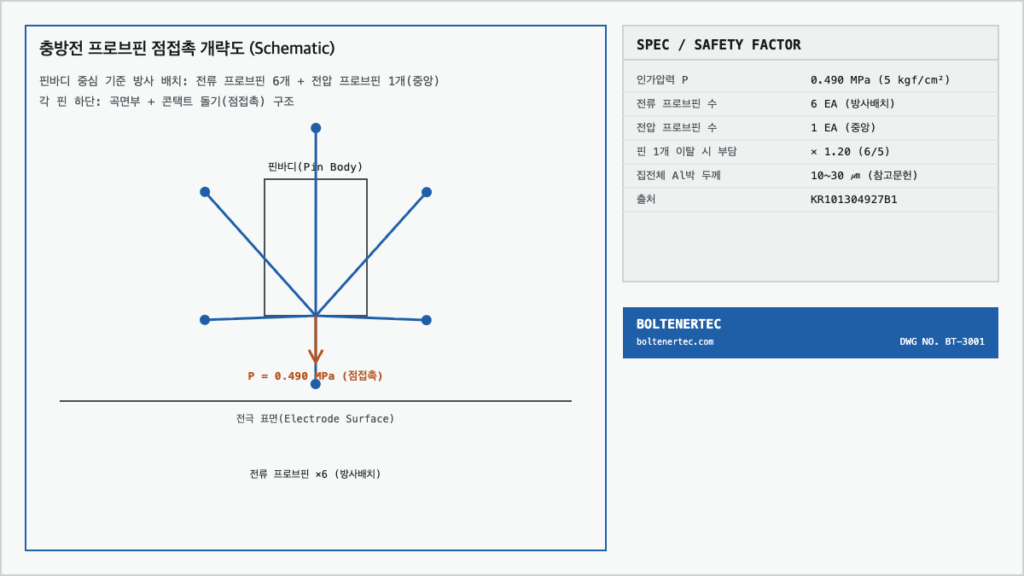
Formation Probe Pin: Verifying Point-Contact Pressure
The contact pressure and pin-arrangement structure of the charge/discharge probe pin used in the formation process were reviewed based on
The contact pressure and pin-arrangement structure of the charge/discharge probe pin used in the formation process were reviewed based on
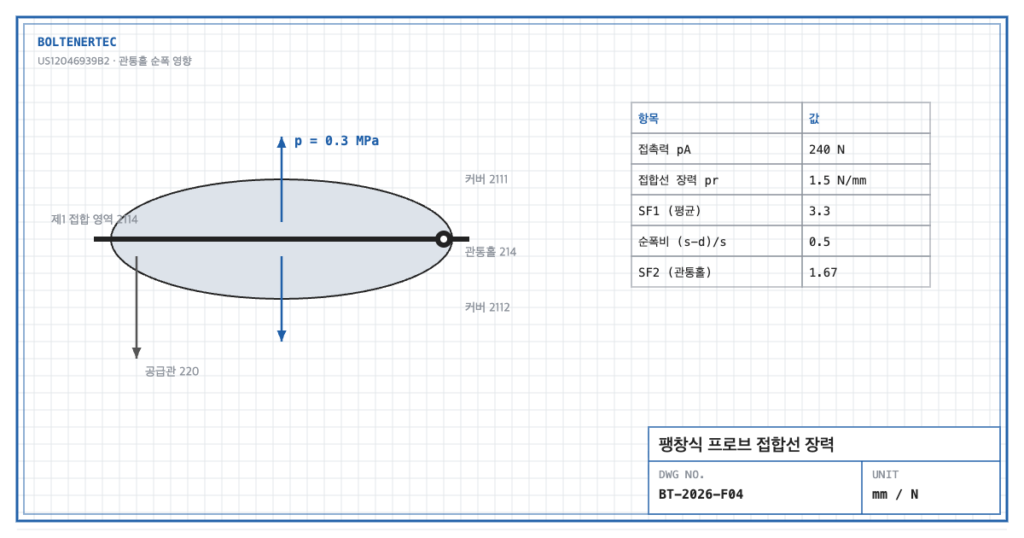
The US12046939B2 probe seam margin averages 3.3 but falls to 1.67 at the penetration hole, so widening the seam there comes first.
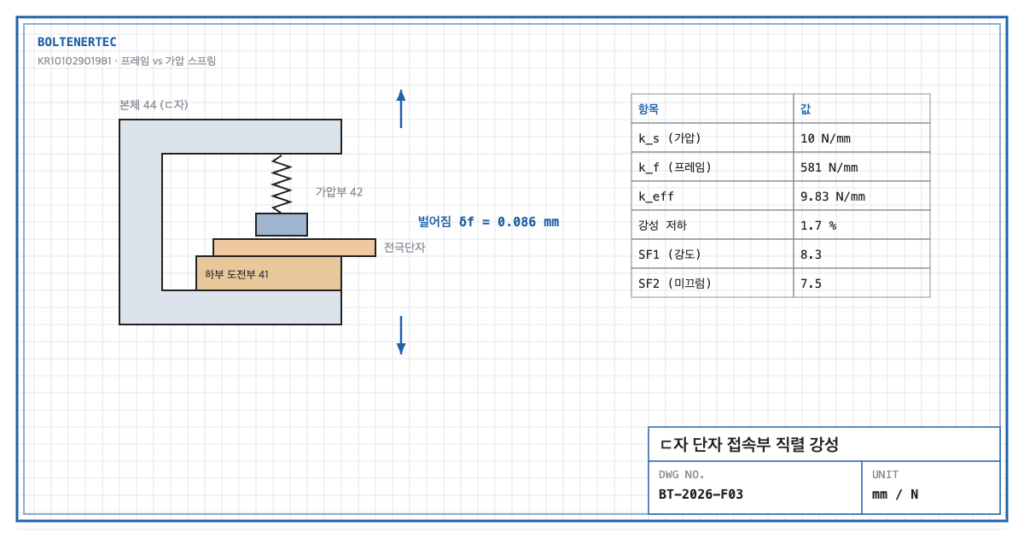
In KR101029019B1 the C-frame costs only 1.7% of effective stiffness, so contact quality depends on pressing stroke and bolt torque.
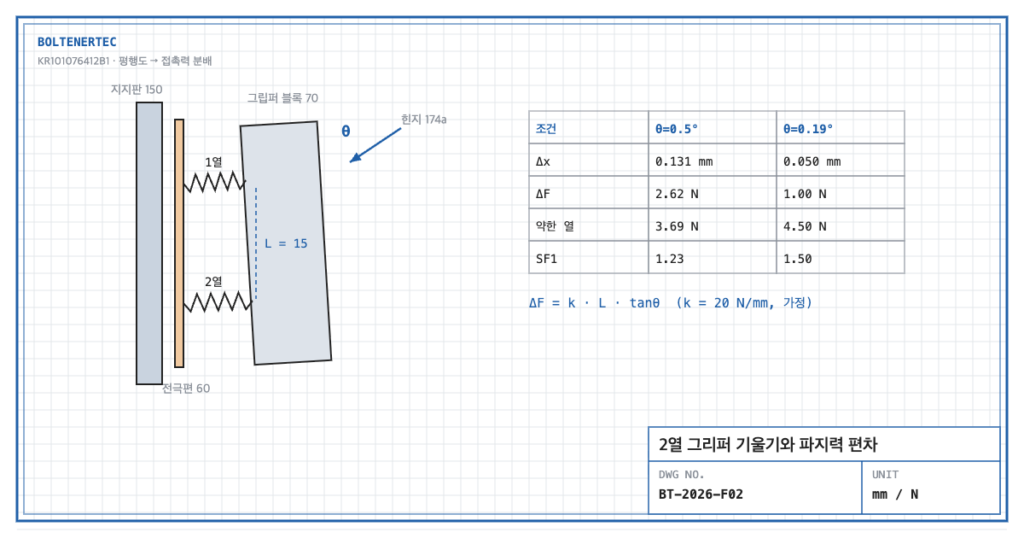
In KR101076412B1 a 0.5° tilt drops the weak row to a 1.23 contact margin, so 0.05 mm closed-position parallelism is the key control.
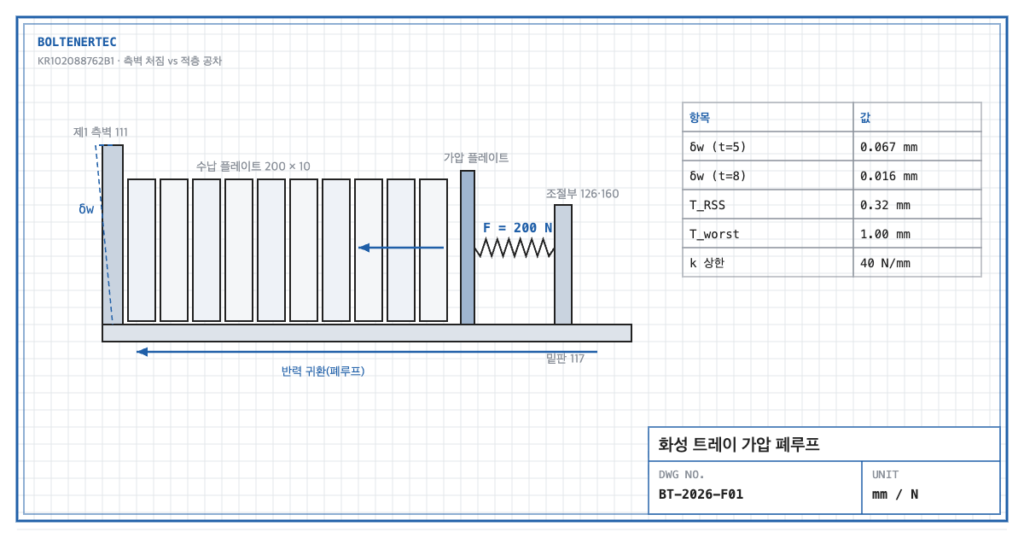
In KR102088762B1 the 0.32 mm stack tolerance is 20 times the 0.016 mm wall deflection, so D = T must be held by the spring adjuster.