Documenting battery production equipment, companies, and technology.
From mixing to logistics, covering equipment makers and technology trends across the entire battery production process.
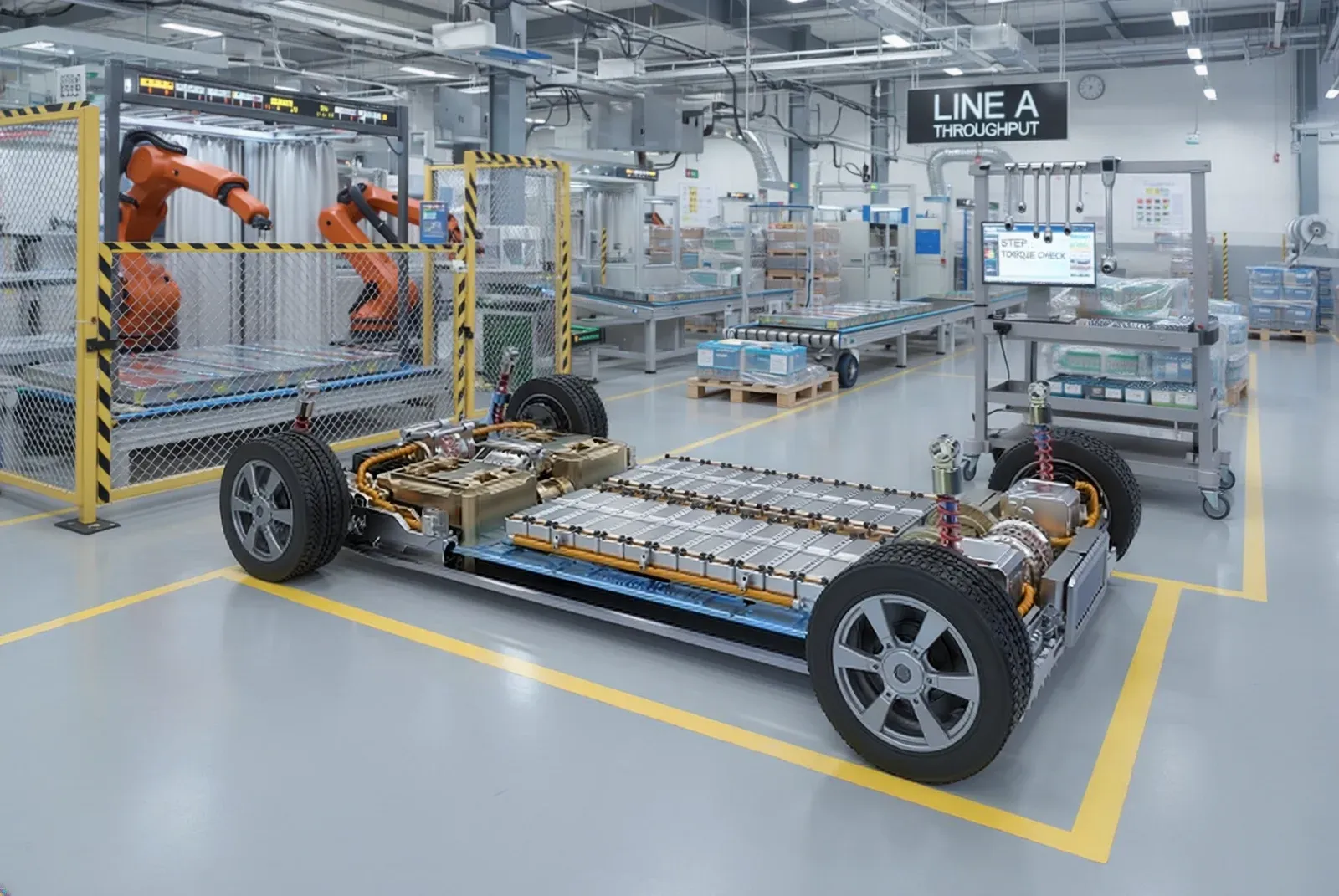
PROCESS INDEX

MIXER
Mixer
Uniformly blends active material, binder, and solvent into electrode slurry. Slurry viscosity and dispersion uniformity determine downstream coating quality.
ELECTRODE
Electrode
Coats, dries, presses, and slits slurry onto current collectors to complete cathode and anode sheets. Coating-thickness uniformity and press density govern cell performance.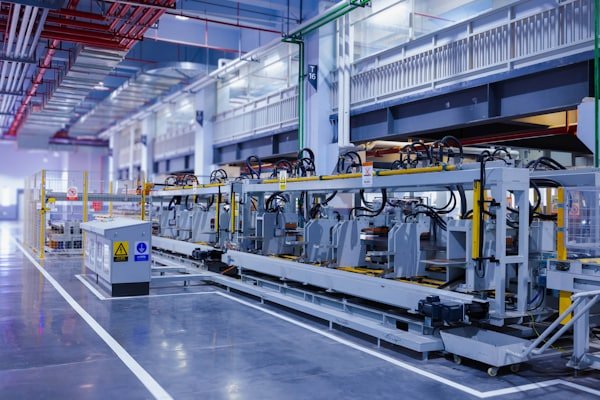
ASSEMBLY
Assembly
Stacks or winds cathode, separator, and anode, inserts the stack into a case, and injects electrolyte to complete the cell.
FORMATION
Formation
Applies the initial charge/discharge to the assembled cell to form the SEI layer and activate cell performance, including aging and grading inspection.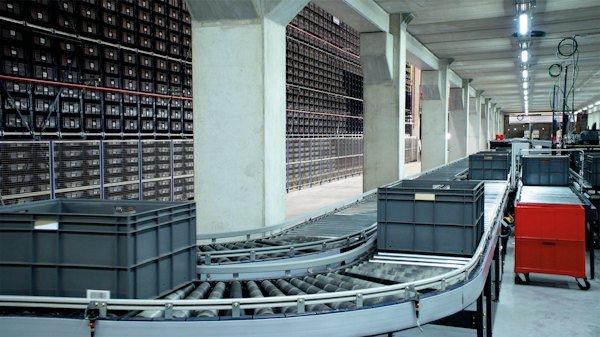
LOGISTICS
Logistics
Automated logistics spanning raw-material intake, inter-process transfer, and finished-cell packing and shipment. Preventing physical cell damage and ensuring traceability are the core requirements.
TRENDS
Trends
Tracks the latest technology trends in battery production equipment, competitor patent disclosures, GWh-scale line expansions, and the mechanical design challenges behind them.WRITING FRAMEWORK
TYPE ADesign Practice
Verifies field mechanical problems with calculation.
- STEP 01Problem DefinitionPresent a field mechanical failure or damage issue
- STEP 02Kinematic AnalysisTrace the physical cause: load concentration, insufficient stiffness, etc.
- STEP 03Calculation & VerificationState variables, develop the equation, derive the result
- STEP 04Shop ApplicationAssembly tolerance, machining method, alignment know-how
- STEP 05One-line SummaryKey engineering takeaway in one line
TYPE BEquipment Trends
Interprets equipment news and disclosures from a mechanical perspective.
- STEP 01Fact SummaryKey facts from primary sources
- STEP 02Mechanical Impact AnalysisTrace effects on equipment load, precision, and configuration
- STEP 03Spec Comparison TableCompare public specs; unconfirmed items marked (undisclosed) or (estimated)
- STEP 04One-line SummaryDesign takeaway in one line
RECENT RECORDS
- Cylindrical, Prismatic or Pouch: A Battery Cell Format Map
- Battery Equipment Mechanical Design: From Drawing to FAT in 8 Months
- Winder Roll Torque: Why It Grows as the Roll Gets Bigger
- Notching and Stacking: The Two Steps That Turn Electrodes into Cells
- Huaxing Yuanchuang, STAR Market’s First Listing in New-Energy Testing
- Wuhan Jingce Electronic, Semiconductor Tester Expanding into Battery Systems
- Udoner Technology, Shenzhen Formation and Grading Specialist (Limited Info)
- Guangzhou Qingtian, Power Electronics into Formation and Testing (Limited Info)
DRAWING NOTES
UNITS
- Dimensions, tolerances
- mm
- Load
- N·kN
- Torque
- N·m
RULES
- NumbersNo qualitative claims such as “strong enough.” Figures and calculation steps are shown.
- ChecksLoad and strength calculations are verified with two safety factors.
- SourcesNews is cited from primary sources only. Figures without an original source are not generated; estimates carry their basis and are marked (estimated).
- PatentsDescribed only on the basis of published patent numbers. Infringement is never concluded.
- LimitsCalculations and judgments rest on general design principles. Verify independently before applying them to a design.
© 2026 boltenertec.com