CETC Fenghua, a display equipment maker under China Electronics Technology Group (CETC), has supplied one cleaner and six degassers to LG Display’s module line in Vietnam. For anyone whose job is equipment mechanical design, this news cannot be ignored, because degassers and cleaners are key back-end equipment that determine cell reliability in OLED module assembly.

CETC Fenghua holds more than 65% of China’s smart degasser market. As its first direct transaction with a major Korean panel maker, this reads as a sign of a crack in the OLED back-end equipment market that Korean and Japanese equipment had nearly monopolized. Because the precision of pressure profile and temperature control in the vacuum chamber directly drives the defect rate in degassing, this was never an area that price competitiveness alone could enter. That a direct deal was still concluded means CETC Fenghua’s process reliability has reached a certain level.
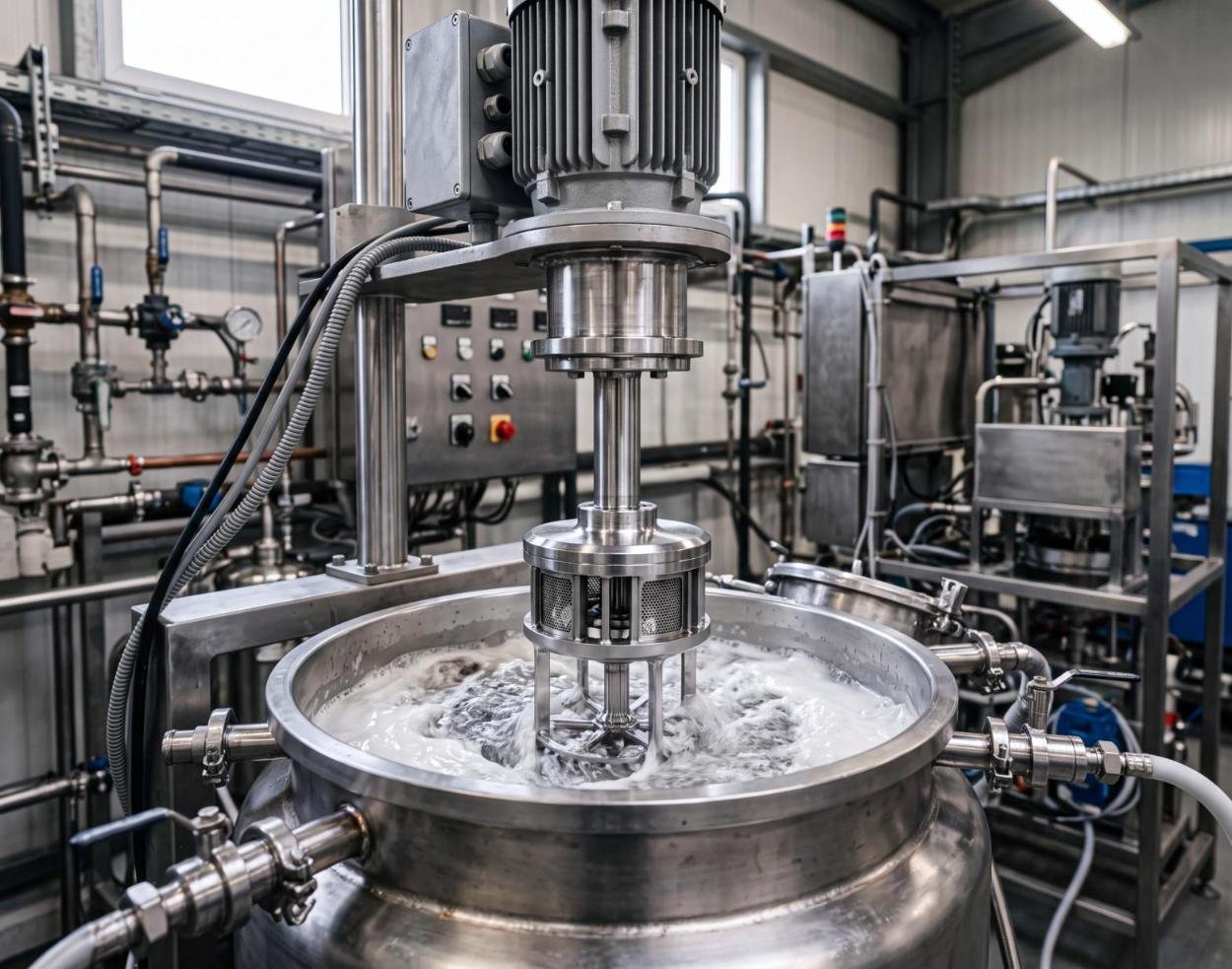
This is not someone else’s problem for the battery R2R equipment industry. The vacuum and thermal management equipment markets for formation and logistics processes have a similar structure. Domestic equipment makers should note that the pattern of Chinese equipment makers building a track record on domestic capacity before entering direct deals with major overseas customers keeps repeating.
Mechanism-Perspective Impact Analysis
Degassers and cleaners are vacuum and cleaning equipment that operate on the same mechanical principles not only in display and semiconductor processes but also in battery R2R equipment. Because this is an OLED equipment market issue, no technical link to a specific battery machine is asserted, and the analysis below is limited to general mechanical engineering principles common to vacuum degassing and cleaning line design.
Vacuum degasser performance is first evaluated by chamber pump-down time. The ideal pump-down process is approximated by the following equation.
$$ t = \frac{V}{S} \ln{\frac{P_0}{P_1}} $$
Here $V$ is chamber volume (L), $S$ is effective pumping speed (L/s), $P_0$ is initial pressure, and $P_1$ is target pressure (general vacuum engineering principle, terminology per ISO 3529). If pumping speed $S$ is low or the chamber interior is complex enough to create dead zones, reaching the target pressure is delayed for the same pump-down time, and the risk of bubbles and voids remaining from uneven degassing grows. This principle applies across adhesive dispensing and coating processes; the actual chamber volume and pumping speed of CETC Fenghua’s equipment are undisclosed and need to be confirmed.
For cleaners, particle contamination control is the core, and the allowable number of particles per unit volume is managed by ISO 14644-1 cleanliness class (ISO Class N). The general convention in cleaning equipment design is that nozzle pressure, roller surface roughness (Ra, μm) and transfer tension variation directly affect particle re-adhesion; specific control values are undisclosed by each equipment maker and need to be confirmed.
Spec Comparison Table
| Item | Confirmed content | Note |
|---|---|---|
| Equipment supplied | 1 cleaner + 6 degassers (7 units in total) | Reported by thelec.net |
| Installation site | LG Display OLED module line, Haiphong, Vietnam | Reported by thelec.net |
| Delivery timing | Phased delivery, late 2025 to early 2026 | Reported by thelec.net |
| Estimated order value | Cleaner about KRW 1 billion/unit, degasser about KRW 0.5 billion/unit, about KRW 4 billion in total (estimate) | Industry estimate, thelec.net |
| CETC Fenghua share in China | 65% or more of Chinese display lines for smart degassers | Reported by thelec.net |
| Chamber pumping speed and volume | To be confirmed (undisclosed) | – |
| Cleaning line cleanliness class | To be confirmed (undisclosed) | – |
Design Reflection Checklist
- Calculate pump-down time from chamber volume V and effective pumping speed S
- Review chamber geometry that eliminates dead zones
- Set particle control targets by ISO 14644-1 cleanliness class
- Confirm management criteria for roller surface roughness Ra and transfer tension variation
One-line summary: Whether domestic equipment can replace these degassers and cleaners can be judged quantitatively only after data on pressure profile control precision and contamination control tolerances is published.