Key News Facts
GM has extended for 20 years its contract for SAIC-GM, the 50:50 joint venture it operates with SAIC Motor. Amid sluggish sales in China and intensifying competition in the shift to electric vehicles, GM — which had been closing plants and cutting model lineups — will focus on Buick and Cadillac as its core brands and discontinue Chevrolet’s domestic sales in China.
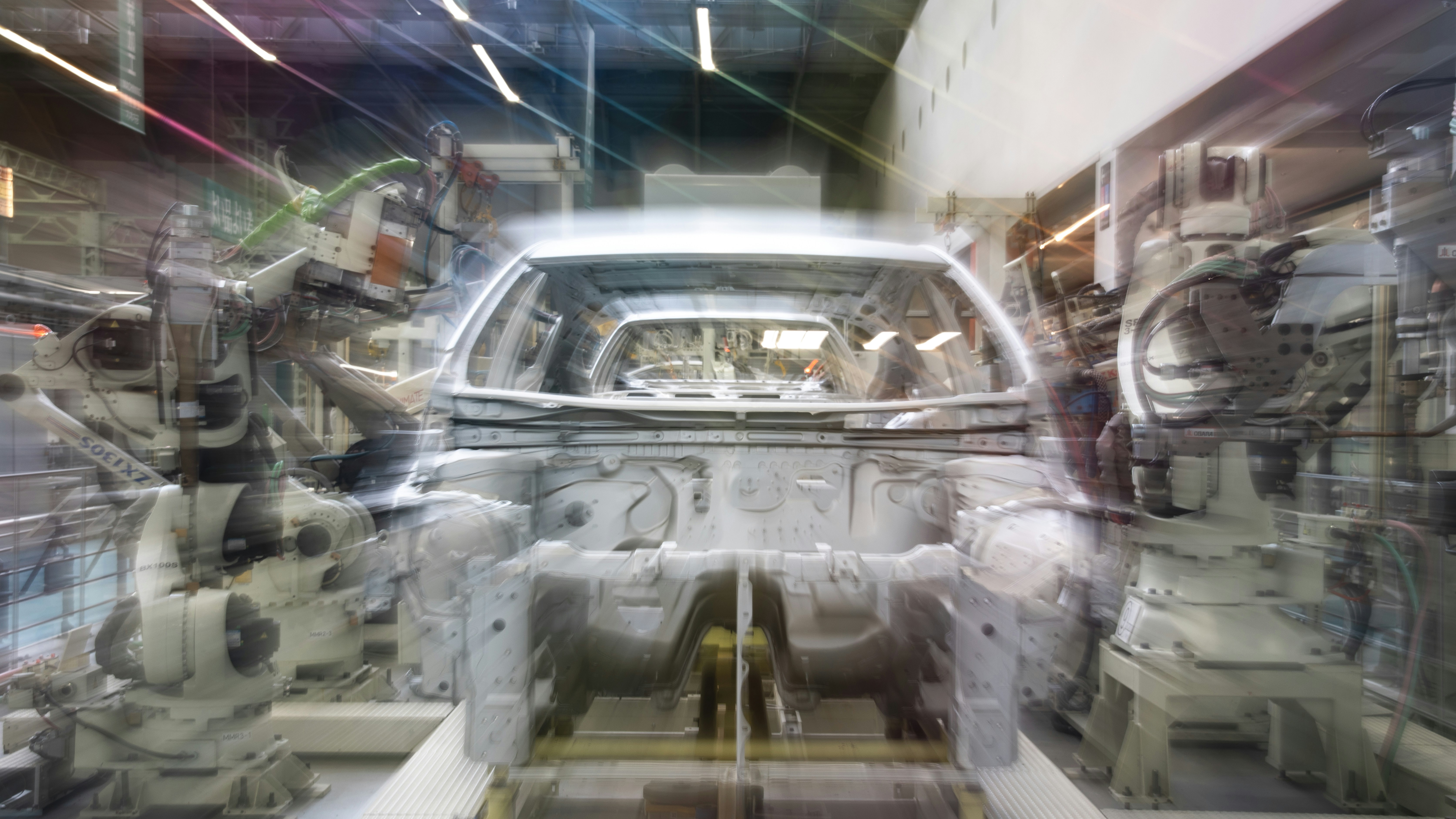
Instead, GM will export Buick and Cadillac vehicles produced in China to the Middle East, Africa, South America, Mexico, and other regions, with a strategy of expanding SAIC-GM’s role from a domestic-market focus to a global production and export base. Plans were also announced to launch at least 30 electric and hybrid models by 2030.
Mechanism-Perspective Impact Analysis
From the standpoint of the R2R equipment supply chain, this news is meaningful because GM is pursuing a dual strategy: continuing to make use of China’s production cost competitiveness and electrification technology capabilities, while lowering its parts supply chain’s dependence on China. If a finished-vehicle maker adopts this kind of dual-track strategy, similar pressure is likely to be placed on the electrode and assembly equipment supply chain that makes the batteries for those vehicles as well.
GM’s supply chain restructuring has continued since then. According to U.S. media reports in September 2026, GM maintained its existing partnerships with LG Energy Solution and Samsung SDI while signing a co-development agreement for sodium-ion cells with Colorado-based startup Peak Energy. The target commercialization timeline is 2029, and an executive stated that “domestic (U.S.) supply chain will be established within two to three years” (reported by Carscoops, 2026-09-15, and StarNews Korea, 2026-09-21). However, neither report disclosed the location, investment amount, or production capacity (GWh) of any new plant — confirmation needed.
From an R2R equipment standpoint, where this trend intersects with the 20-year SAIC-GM extension is cell chemistry bifurcation. The China-based production and export base continues to run existing NCM/NCA lithium-ion lines, while new U.S. lines are reportedly considering sodium-ion cells in parallel. Sodium-ion cathode materials (layered oxides, Prussian white, polyanionic compounds, etc.) differ from NCM-type materials in particle hardness and tap density, which means coater die-head gap settings and drying-oven zone heat profiles must be managed separately by cell chemistry. Current collectors also differ — sodium-ion cells can use aluminum foil at the anode instead of copper foil — requiring separate slitter knife clearance and winding tension standards by line. This description is based on general secondary-battery manufacturing process principles; the actual equipment specifications GM and Peak Energy will adopt remain undisclosed (on-site measurement and re-confirmation required).
While the China-U.S. bifurcation itself is a finished-vehicle assembly strategy, R2R equipment orders reflect the chemistry bifurcation first. Coater/slitter orders typically follow 6-12 months after a finished-vehicle supply agreement is announced, once the cell maker finalizes new-line specifications, so whether this SAIC-GM extension and the Peak Energy sodium-ion agreement actually translate into equipment orders needs to be confirmed in the next quarterly earnings releases (estimate, based on typical equipment order lead time).
Shop-notes
as more finished-vehicle makers and cell manufacturers seek to run lithium-ion and sodium-ion production in parallel at a single plant, the choice comes down to fully separate coater/slitter lines per chemistry versus a shared line with swappable die-head/knife modules. The latter has lower upfront cost but higher changeover time and contamination-control burden, so until production volume is confirmed, fully separate lines per chemistry are the safer choice from a safety-factor standpoint.
Design Reflection Checklist
- Check whether coater die-head gap specifications are separated by cell chemistry (lithium-ion / sodium-ion) when reviewing new lines
- Check whether drying-oven zone heat profiles are bifurcated by chemistry
- Check whether slitter knife clearance is re-set to account for the anode current-collector change (aluminum foil) when introducing sodium-ion lines
- Check whether changeover time and contamination-control cost have been compared between fully separate coater/slitter lines and shared swappable-module lines
One-line summary: GM’s 20-year SAIC-GM extension and its parallel review of U.S. sodium-ion production may add pressure toward cell-chemistry bifurcation in R2R lines.